
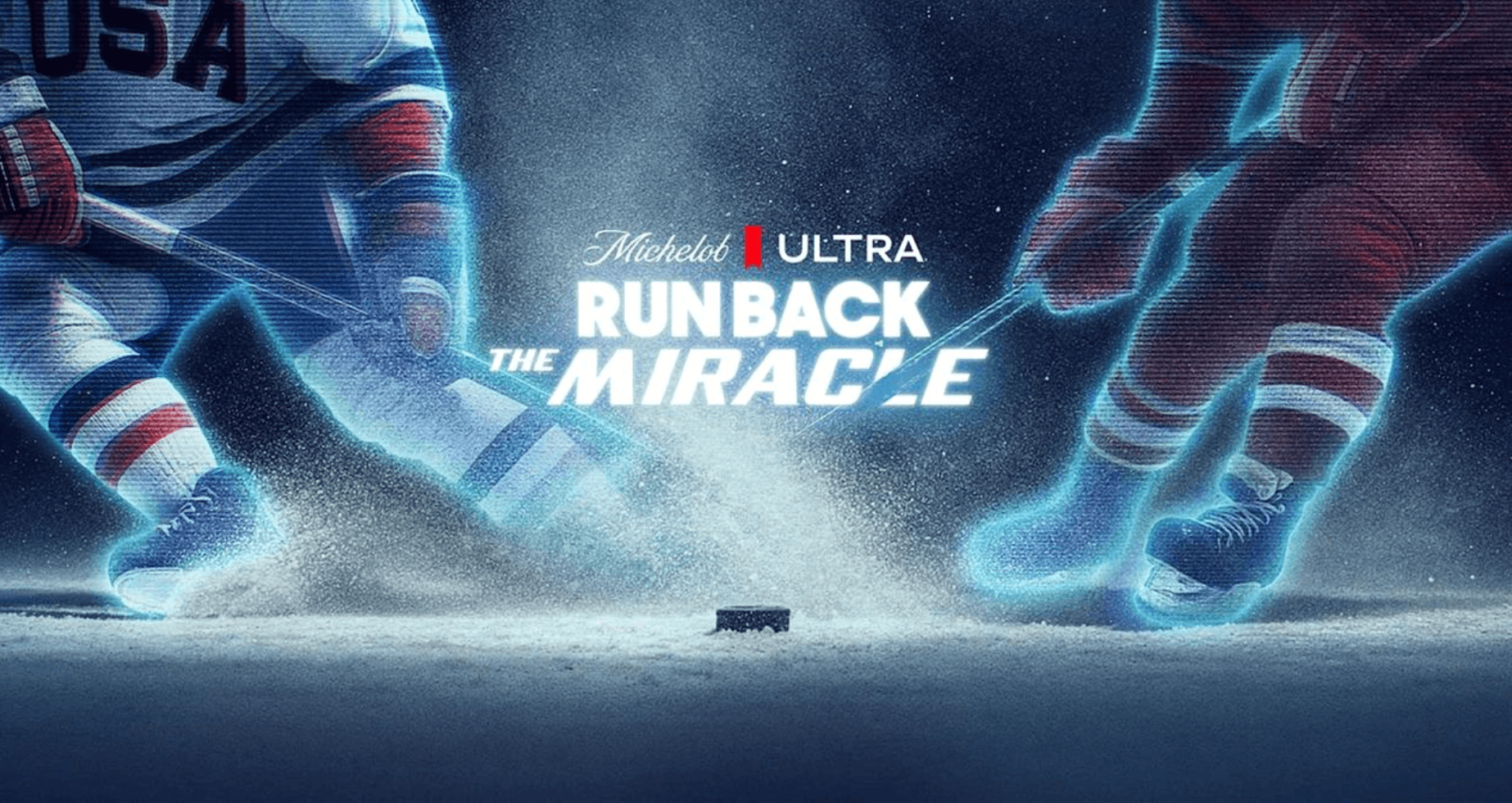
Recent grads Mia Kasper (Art Direction, 2025) and Kedi Hickman (Copywriting, 2025), alongside their team at Wieden + Kennedy New York, brought sports history back to life with an ambitious experiential activation celebrating the iconic 1980 “Miracle on Ice” hockey game.
Using hologram technology, the event recreated the historic matchup, giving fans the chance to experience one of the most legendary moments in sports.
As the sole creative team leading the project, Kasper and Hickman helped shape everything from the storytelling and branding to the overall fan experience.
We caught up with Hickman to hear more about the experience.
Walk us through how the idea came together and how you sold it through.
Michelob has been doing tech-forward, sports-related activations for a few years now, so we were tasked with concepting ideas for how we could show up similarly around the Winter Olympics.
Holograms came up during research and the bigger idea flowed pretty quickly from that — rooted in this very simple thought that as sports fans, there are so many historic games we wish we could have attended. Once we started looking into how far the tech had come we realized a few things. One, this might actually be possible. Two, this hadn’t been attempted before. And three, someone was going to do this eventually.
Our clients were incredible throughout the process and I think really came from just a deep excitement for what this event could be. The very idea of it made everyone pause for a moment and daydream of what this could mean for live sports as an entire category. Once that happened, the selling through of the idea wasn’t as much the hard part as was proving that we could actually pull this off.
What does “leading as the sole creative team” look like day-to-day on a project at this scale?
It was a lot of meetings! Lots of reviewing work and providing feedback. Obviously neither of us had experience creating holograms, so one of the difficult parts was just trusting that everyone would do their part and do it exceptionally, knowing that we couldn’t really help if we tried. Thankfully our partners were wonderful.
You quickly realize a project this big has so many different aspects that you just have to control what you can control and have faith in the partners you’ve chosen to work with. For us, that was the trailers, that was the stroytelling in the show, that was how the whole experience—from the branding, the layout, the design of all the touchpoints, the atmosphere—would look and feel. Amongst other things, it’s hard to remember it all haha.
Was there a moment where the scale or pressure really hit you?
Haha yes, a few times. One was when all of a sudden I was in a zoom with Al Michaels and he was reading our script we had written for him to narrate the show, and he was talking about how he was bringing his grandkids and how they were all excited to go and re-live this moment. It felt very real then.
But definitely the most it ever hit me was when on the day of the show. I was walking up from the lobby after interviewing members of the ’80 team, and all of a sudden I opened the doors to teams of local news crews and reporters and thousands of fans who had started to line up at the door waiting to come in. All wearing Team USA jerseys and all chanting and excited. Some of them saying how they’d driven 24+ hours to get here. That felt completely surreal.
What skills from Brandcenter did you rely on most? Is there a lesson from a specific Brandcenter class, project or mentor that comes to mind?
I think what Brandcenter taught me most, and what I leaned on most throughout this was trusting my gut, because the truth is we had no idea what we were doing! We had no real world experience to fall back on. But at school we tried and failed so many times and learned from those failures that you develop a sense for when something — whether that be how a hologram should look, how an interview question should be phrased, or how to best fill space on a 180 foot screen stretching end to end over a hockey rink — feels or doesn’t feel right. Whether it will, or will not, connect to an audience. Over and over again I found myself just leaning into that gut reaction and trusting it. I think Brandcenter imbues you with that confidence, through the repetition of practice, that allows you to do that once you get out in the real world.
Any funny behind-the-scenes moments?
So many. But I don’t know what should go online…
Want to know more?
Read about “Run Back the Miracle” on Campaign.